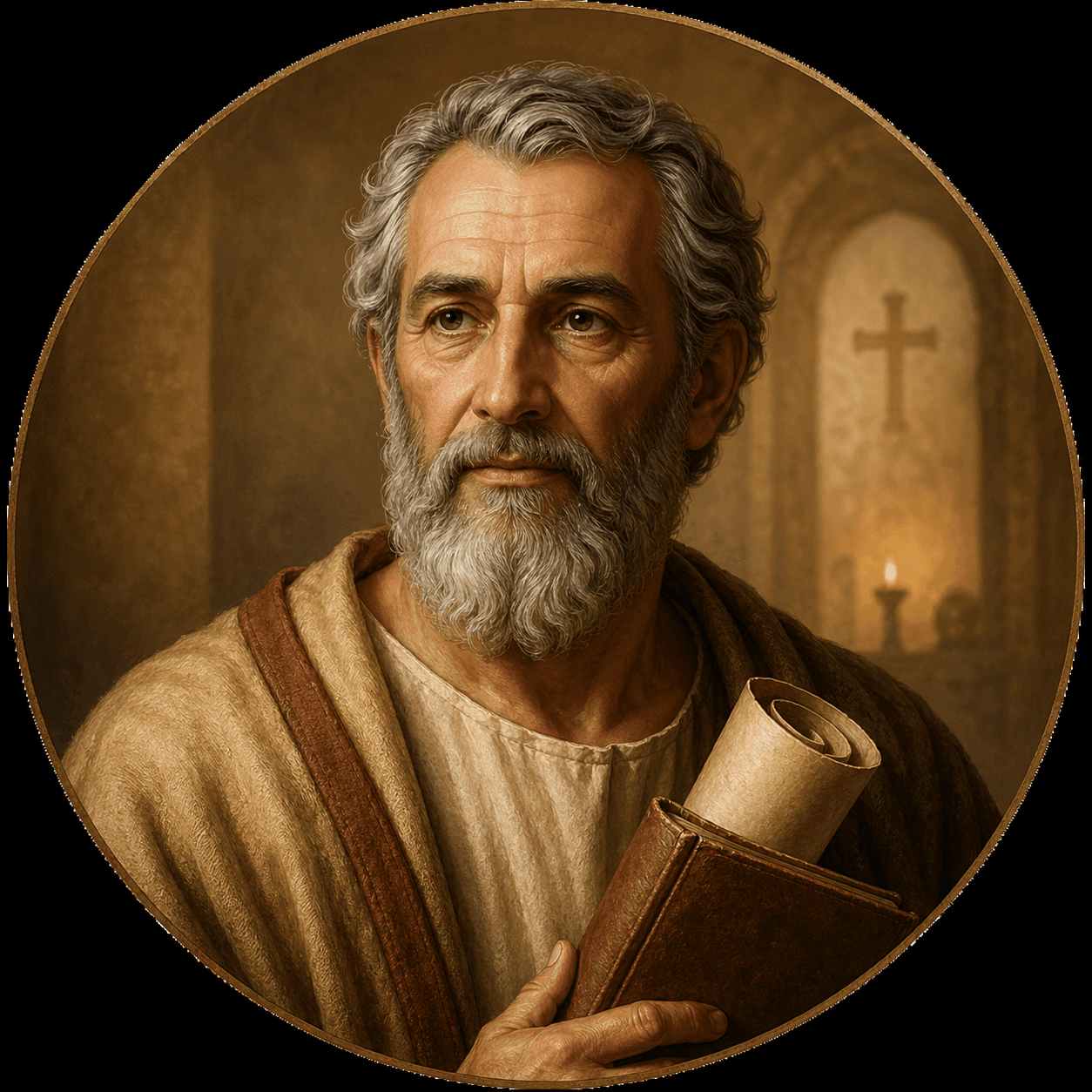
Apostolic Father
Ignatius of Antioch
Shared Catholic/Orthodoxcatholicorthodox
Ignatius wrote on church unity, the bishop, the Eucharist, and martyrdom while travelling under guard to Rome.
Antioch and Asia Minor
unitybishopeucharistmartyrdom
Included Works
- The Epistle of Ignatius to the Ephesians (22 sections, 22 paragraphs)
- The Epistle of Ignatius to the Magnesians (16 sections, 16 paragraphs)
- The Epistle of Ignatius to the Trallians (14 sections, 14 paragraphs)
- The Epistle of Ignatius to the Romans (11 sections, 11 paragraphs)
- The Epistle of Ignatius to the Philadelphians (12 sections, 12 paragraphs)
- The Epistle of Ignatius to the Smyrnaeans (14 sections, 14 paragraphs)
- The Epistle of Ignatius to Polycarp (9 sections, 9 paragraphs)
Apostolic Father
Clement of Rome
Shared Catholic/Orthodoxcatholicorthodox
Clement's letters are among the earliest non-New Testament Christian texts and address order, repentance, and perseverance.
Rome
church-orderrepentanceperseveranceapostolic-succession
Included Works
- First Letter to the Corinthians (65 sections, 66 paragraphs)
- Second Letter to the Corinthians (20 sections, 21 paragraphs)
Apostolic Father
Polycarp of Smyrna
Shared Catholic/Orthodoxcatholicorthodox
Polycarp links the apostolic age to the mid-second century through pastoral exhortation and martyr testimony.
Smyrna
pastoral-caremartyrdomsteadfastnessapostolic-witness
Included Works
- The Epistle of Polycarp to the Philippians (15 sections, 15 paragraphs)
- The Martyrdom of Polycarp (23 sections, 32 paragraphs)
Apostolic Writings
The Didache
Shared Catholic/Orthodoxcatholicorthodox
The Didache preserves an early manual of Christian morals, baptism, Eucharist, ministry, and eschatological watchfulness.
Eastern Mediterranean
catechesisbaptismeucharistchurch-order
Included Works
- The Didache (17 sections, 17 paragraphs)
Apostolic Writings
The Epistle of Barnabas
Shared Catholic/Orthodoxcatholicorthodox
Barnabas presents a strongly typological reading of Scripture and a moral contrast between the way of light and the way of darkness.
Eastern Mediterranean
scripturetypologymoral-teachingcovenant
Included Works
- The Epistle of Barnabas (21 sections, 22 paragraphs)
Early Christian Apology
Mathetes to Diognetus
Shared Catholic/Orthodoxcatholicorthodox
The Letter to Diognetus offers one of the most memorable early descriptions of Christian life in the world.
Greek-speaking Church
apologeticschristian-lifeincarnationmission
Included Works
- The Epistle of Mathetes to Diognetus (12 sections, 17 paragraphs)
Early Christian Apologist
Justin Martyr
Shared Catholic/Orthodoxcatholicorthodox
Justin explained Christianity to the Roman world and preserved one of the church's earliest detailed descriptions of Christian worship.
Samaria and Rome
apologeticsliturgyreasonprophecy
Included Works
- The First Apology of Justin (69 sections, 73 paragraphs)
Ante-Nicene Father
Irenaeus of Lyon
Shared Catholic/Orthodoxcatholicorthodox
Irenaeus defended apostolic faith against Gnostic systems and gave one of the earliest large-scale accounts of Scripture, the rule of faith, succession, and recapitulation in Christ.
Smyrna, Rome, and Lyon
apostolic-successionrule-of-faithgnosticismrecapitulationscripture
Included Works
- Against Heresies (173 sections, 754 paragraphs)
Latin Ante-Nicene Father
Tertullian
Shared Catholic/Orthodoxcatholicorthodox
Tertullian was an early Latin theologian and apologist whose writings shaped Christian vocabulary on apologetics, baptism, prayer, Christology, resurrection, and the Trinity.
Carthage
apologeticsbaptismprayertrinitychristologyresurrection
Included Works
- Apology (50 sections, 50 paragraphs)
- Prescription against Heretics (44 sections, 46 paragraphs)
- On Baptism (20 sections, 24 paragraphs)
- On Prayer (29 sections, 31 paragraphs)
- On the Flesh of Christ (26 sections, 26 paragraphs)
- On the Resurrection of the Flesh (63 sections, 64 paragraphs)
- Against Praxeas (32 sections, 32 paragraphs)
Greek Ante-Nicene Father
Origen
Shared Catholic/Orthodoxcatholicorthodox
Origen was one of the most influential early Christian biblical scholars, apologists, and speculative theologians, especially important for Scripture, prayer, Christology, and the spiritual interpretation of the Bible.
Alexandria and Caesarea
scriptureapologeticsspiritual-exegesischristologyprayercontroversy
Included Works
- De Principiis (27 sections, 300 paragraphs)
- Contra Celsum (622 sections, 694 paragraphs)
- Commentary on the Gospel of John (145 sections, 156 paragraphs)
Latin Ante-Nicene Father
Cyprian of Carthage
Shared Catholic/Orthodoxcatholicorthodox
Cyprian was bishop of Carthage during persecution and controversy, writing with lasting influence on church unity, episcopal order, repentance, martyrdom, prayer, and Christian discipline.
Carthage
church-unityepiscopacymartyrdomrepentanceprayerpastoral-discipline
Included Works
- On the Unity of the Church (1 sections, 29 paragraphs)
- On the Dress of Virgins (1 sections, 26 paragraphs)
- On the Lapsed (1 sections, 38 paragraphs)
- On the Lord's Prayer (1 sections, 39 paragraphs)
- On Mortality (1 sections, 27 paragraphs)
- On Works and Alms (1 sections, 28 paragraphs)
- On Patience (1 sections, 24 paragraphs)
- Exhortation to Martyrdom (14 sections, 20 paragraphs)
Shared Catholic/Orthodoxcatholicorthodox
Athanasius defended the full deity of Christ and wrote one of the church's classic explanations of the Incarnation.
Alexandria
incarnationnicene-faithsalvationscripture
Included Works
- On the Incarnation of the Word (57 sections, 63 paragraphs)
Cappadocian Father
Basil the Great
orthodoxorthodoxcatholic
Basil is one of the central Cappadocian fathers and a major voice on the Trinity, ascetic life, and the Holy Spirit.
Cappadocia
trinityholy-spiritasceticismcappadocian
Included Works
- On the Holy Spirit (30 sections, 139 paragraphs)
Cappadocian Father
Gregory Nazianzen
orthodoxorthodoxcatholic
Gregory Nazianzen is one of the great Cappadocian theologians, especially revered for his Trinitarian preaching.
Cappadocia and Constantinople
trinitytheologyorationscappadocian
Included Works
- Theological Orations (5 sections, 136 paragraphs)
Cappadocian Father
Gregory of Nyssa
orthodoxorthodoxcatholic
Gregory of Nyssa is one of the great Cappadocian theologians, known for Trinitarian theology, theological anthropology, spiritual ascent, and profound reflection on resurrection and the Christian life.
Cappadocia
trinitycappadocianimage-of-godresurrectionasceticismspiritual-ascent
Included Works
- The Great Catechism (1 sections, 25 paragraphs)
- On the Making of Man (32 sections, 221 paragraphs)
- On the Soul and the Resurrection (1 sections, 88 paragraphs)
- On Not Three Gods (1 sections, 19 paragraphs)
- On the Holy Spirit, Against the Macedonians (1 sections, 27 paragraphs)
- On Virginity (24 sections, 28 paragraphs)
- On Pilgrimages (1 sections, 1 paragraphs)
- On the Baptism of Christ (1 sections, 11 paragraphs)
Golden-Mouthed Father
John Chrysostom
orthodoxorthodoxcatholic
Chrysostom is one of the most influential Greek fathers, known for preaching, pastoral theology, and moral instruction.
Antioch and Constantinople
preachingpriesthoodpastoral-carescripture
Included Works
- On the Priesthood (6 sections, 131 paragraphs)
Catechetical Father
Cyril of Jerusalem
Shared Catholic/Orthodoxcatholicorthodox
Cyril's catechetical lectures are among the church's most important early instructions on baptism, creed, sacrament, and worship.
Jerusalem
catechesisbaptismcreedliturgy
Included Works
- Catechetical Lectures (25 sections, 645 paragraphs)
Latin Father
Augustine of Hippo
catholiccatholicprotestant
Augustine shaped Western Christianity through biblical reflection, confession, and theological synthesis.
North Africa
conversiongracememoryprayer
Included Works
- The Confessions (289 sections, 475 paragraphs)
Latin Father and Doctor
Jerome
catholiccatholicorthodoxprotestant
Jerome was a major biblical scholar, translator, ascetic writer, and Latin Father, best known for his work on Scripture, the Vulgate, monastic life, and polemical theology.
Stridon, Rome, and Bethlehem
scripturetranslationasceticismmonasticismmarychurch-history
Included Works
- Letters (201 sections, 1372 paragraphs)
- Prefaces (8 sections, 26 paragraphs)
- The Perpetual Virginity of Blessed Mary (1 sections, 34 paragraphs)
- Against Jovinianus (2 sections, 112 paragraphs)
- Against Vigilantius (1 sections, 19 paragraphs)
- Against the Pelagians (5 sections, 474 paragraphs)
- The Life of St. Hilarion (1 sections, 48 paragraphs)
- The Life of Malchus, the Captive Monk (1 sections, 13 paragraphs)
- The Life of Paulus the First Hermit (1 sections, 21 paragraphs)
- De Viris Illustribus (136 sections, 150 paragraphs)
Latin Father and Doctor
Ambrose
catholiccatholicorthodoxprotestant
Ambrose of Milan was a bishop, preacher, theologian, and pastor whose writings shaped Western teaching on the Trinity, sacraments, repentance, clerical life, ascetic devotion, and public Christian leadership.
Milan
trinityholy-spiritsacramentsrepentancepastoral-leadershipasceticism
Included Works
- On the Christian Faith (5 sections, 920 paragraphs)
- On the Holy Spirit (54 sections, 551 paragraphs)
- On the Mysteries (10 sections, 72 paragraphs)
- On Repentance (29 sections, 240 paragraphs)
- On the Duties of the Clergy (103 sections, 662 paragraphs)
- Concerning Virgins (26 sections, 183 paragraphs)
- Concerning Widows (16 sections, 108 paragraphs)
- On the Death of Satyrus (3 sections, 223 paragraphs)
- Letters (12 sections, 353 paragraphs)
Latin Father and Doctor
Leo the Great
catholiccatholicorthodoxprotestant
Leo the Great was bishop of Rome, a major preacher, and a defining Christological voice at Chalcedon through his Tome and wider correspondence.
Rome
christologychalcedonpreachingpapacyliturgypastoral-care
Included Works
- Sermons (288 sections, 293 paragraphs)
- Letters (342 sections, 448 paragraphs)
Eastern Father and Doctor
John of Damascus
orthodoxorthodoxcatholic
John of Damascus synthesized patristic theology for the Byzantine tradition and is especially important for Orthodox doctrine, Christology, icons, sacraments, and the confession of the faith.
Damascus and Mar Saba
orthodox-faithtrinitychristologyiconssacramentspatristic-synthesis
Included Works
- Exposition of the Orthodox Faith (101 sections, 547 paragraphs)